
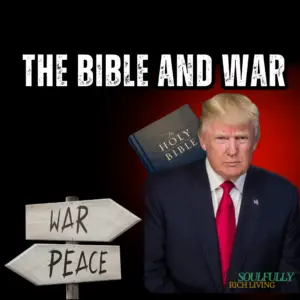
For over a month, the U.S. and Israel have waged a deadly, illegal, and unauthorized war on Iran. A two-week ceasefire offers a “sigh of relief,” but that relief is temporary at best.
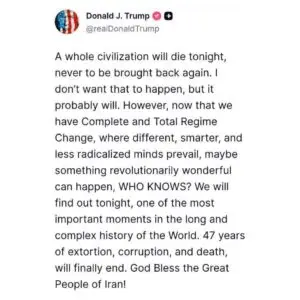
On Tuesday, President Trump threatened the “existential” death of a whole civilization. No regard for children, animals, and innocent civilians.
While all sides claim victory and prepare for negotiations, the toll of Operation Epic Fury is staggering. More than 3,000 people have been killed in Iran since the start of the U.S.-Israeli war on Iran, according to reporting from Dropsitenews.com.
This violence continues to manufacture the very identities Biblical scripture labels as vulnerable and in need of protection. War creates orphans, widows, immigrants, and forces people into poverty.
Many of the targeted sites have been residential areas, hospitals, and elementary schools. The World Health Organization has confirmed more than 20 hospitals have been struck. Truthout has confirmed that American and Israeli attacks have damaged nearly 500 schools and 300 health centers throughout Iran.
When educational institutions and medical facilities are reduced to rubble, innocent civilians and first responders become the victims. And the cycle of violence unleashed will inevitably claim the lives of those sent to wage it.
In retaliatory strikes, at least a dozen American soldiers have been killed, with hundreds of injuries sustained. In addition, Iran’s countermeasures have targeted key industries, including the fuel and power, aviation, and tourism sectors.
If we are to grasp the weight of this moment truly, we must peel back the layers of military strategy, geopolitics, xenophobia, and financial gain or greed. We must acknowledge the human and environmental costs of war and see the faces of creation, both human and animal, beneath the rubble.
If you are a person of faith or have some spiritual framework, how are you called to respond to those who are oppressed? War is a spiritual crisis. We must center those experiencing harm, chaos, and destruction.
Who Is Affected in the Iran War?
Finding information on the human side of this conflict has been difficult. Traditional mainstream United States media is pretty silent. I routinely find my information from independent journalists and non-Western outlets. They place greater emphasis on the civilian toll that American media omits.
War rarely stays on the battlefields. It will travel through supply chains with the closing of the Strait of Hormuz. It will inflate gas prices at the pump when oil tankers in the Persian Gulf and other fuel infrastructure sites are attacked.
As the borders tighten and the supply chains fail, the primary export of this conflict has become clear: the poor, the widow, the orphan, and the refugee.
This is not a new phenomenon; war and injustice have always created those identities. However, Biblical Scripture does offer ways to respond.
For those seeking a moral compass in this chaos, the ancient texts could point us toward a justice that the world rarely chooses.
The Bible and War: Who Does God Tell Us to Protect?
When Scripture speaks about justice, it consistently names four groups: the widow, the orphan, the poor, and the foreigner. We see this mandate throughout Scripture and in the words of the prophets; it is echoed in the teachings of Jesus.
“True justice must be given to foreigners living among you and to orphans, and you must never accept a widow’s garment as security for her debt. (Deuteronomy 24:17 New Living Translation)
Do not oppress widows, orphans, foreigners, and the poor. And do not scheme against each other. (Zechariah 7:10 New Living Translation)
This is what the Lord says: Be fair-minded and just. Do what is right! Help those who have been robbed; rescue them from their oppressors. Quit your evil deeds! Do not mistreat foreigners, orphans, and widows. Stop murdering the innocent! (Jeremiah 22:3: New Living Translation)
Unnecessary military aggression births injustices. A young woman becomes a widow overnight when her partner dies in a carpet bombing. A child becomes an orphan through a missile strike at a hospital. A family faces starvation and poverty when military forces destroy bridges and other infrastructure, cutting them off from resources. A neighbor becomes a foreigner when conflict forces them to flee.
In conversations about the Bible and war, some point to just war theory, national defense, or the threat of some great evil without any substantial evidence, historical context, or cultural acceptance.
Christian Nationalists are labeling it the Holy War and are invoking biblical parables to justify war. Some on the conservative side may point to Romans 13, which says the governing authority has the power of the sword.
The Pauline text in Romans has been used to justify government authority and communicate that their orders should be obeyed. However, those scriptures assume that the authority or government is morally just, which is rare. It doesn’t mean unwavering loyalty to those in power. And I’d argue the sword evolving into an economic engine capitalizing on terror wasn’t what the writers intended.
Furthermore, the Bible introduces readers to far more unjust rulers than just ones. From Genesis to Revelation, political authority is routinely portrayed as corrupt, violent, and oppressive. A major motif of the Bible demonstrates how power often leads to corruption.
What Would Prophets Do?
The individuals who confronted power were the prophets. As Walter Brueggemann mentions in Interrupting Silence -God’s Command to Speak Out, they are “uncredentialled poets without pedigree or authorization who uttered words outside the regimes”.
They are described as poets because, although their words are written in the Bible, the social reality is that they would have been spoken words. That sort of adds power to those fiery words directed at those in power.
Brueggmann claimed the prophets frequently called out “a triad of exploitative labor, unjust taxation, and exhibition of surplus wealth.”
The offensive substance of their poetry was, moreover, matched by offensive imagery as the poets, with immense courage and imagination, utilized savage and daring metaphors in an attempt to pierce the narcotized self-assurance and indifference of the totalitarian regimes.
The prophets judged those behaviors as both inconsiderate and against God. I believe during times of conflict, we must remember the prophets.
A prophet would ask deep, empathetic, and victim-centered questions. Who bears the cost? What can I do to help? How should I speak out? Who benefits if I stay quiet?
If our theology defends destruction without naming its human toll, it drifts from the heart of the gospel.
What would a prophet say today regarding the flagrant violation of international law and a deadly attack on a school? Or the thought of nuclear war?
The Pope’s Palm Sunday Message
On Palm Sunday, Pope Leo XIV delivered a scathing message to those in power waging war, in part drawing on words from one of the Bible’s prophets. His homily gave a strong rebuke to war mongers.
“Brothers and sisters, this is our God: Jesus, King of Peace, who rejects war, whom no one can use to justify war. He does not listen to the prayers of those who wage war, but rejects them, saying: “Even though you make many prayers, I will not listen: your hands are full of blood” (Is 1:15).
Using the words of Isaiah, another prophet, the Pope acknowledged the loss of life, destruction, and injustice in the Middle East. He lamented the wounds of the human family. God is love! Have mercy! Lay down your weapons! Remember that you are brothers and sisters!” said the Pope.
A More Demanding Oath
Political leaders take oaths to defend their countries; however, most cling to power and greed. People of faith, any faith, take vows to love the Creator and their neighbor.
In today’s world, more people of faith are needed as peacekeepers. Violence is complex. And this blog does not dive into foreign policy. Our purpose is to remind readers that the Bible’s moral arc bends toward protecting the vulnerable.
Christians are called to resist narratives that normalize suffering as collateral damage.
If this reflection stirred something in you, share it with your faith or spiritual community. A Soulfully Rich Life refuses to flourish at the expense of another’s survival.
Soulfully Takeaways:
•War consistently harms the vulnerable groups Scripture commands us to protect.
•Bible and war conversations must center on widows, orphans, the poor, and the foreigner.
• Purpose and justice are discerned through grounded, justice-oriented action.